
Building Credibility in an Engineering Business - Part Three
12 December 2023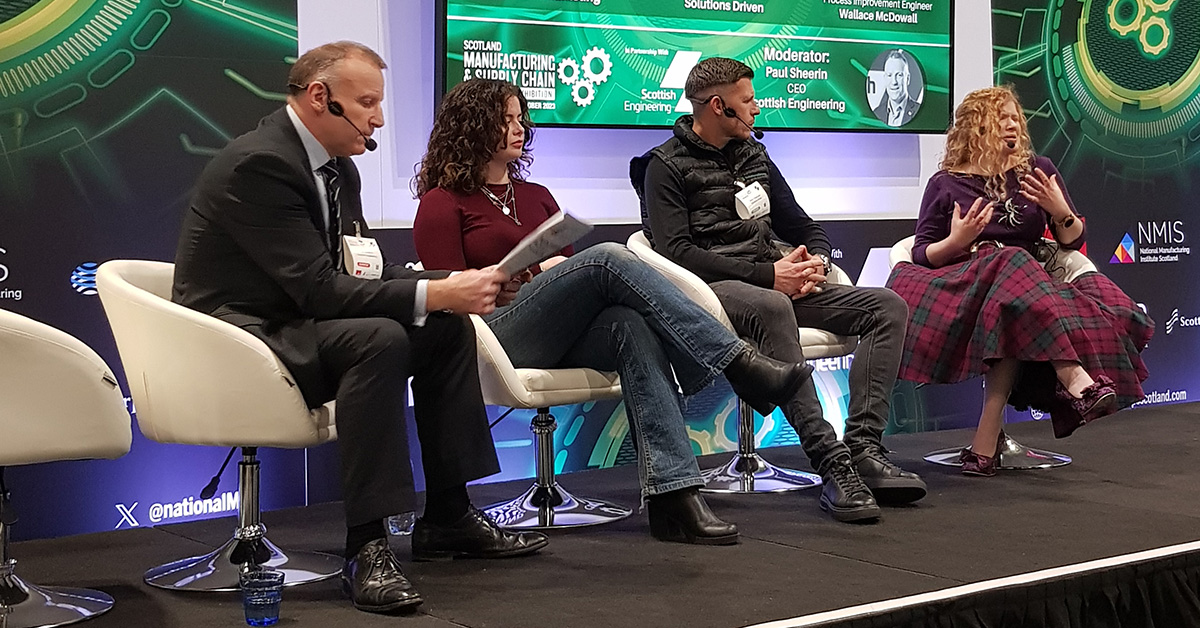
Engineering businesses have amazing products and services that benefit their customers, and they often believe that the product/service will speak for itself. But you must build credibility with your customers before they even look at your product. Credibility is essential in every business, and even more so in technical areas like engineering. Here in this blog series, I talk about some of the ways you can build your business’s credibility. In Part Three, I talk about the next level of credibility building: How you can become your industry’s Thought Leader.
This is Part Three – you can find Part One here and Part Two here.
In Part One of this blog series, I outlined what credibility is and why it is important, especially for engineering businesses. I have already written about how to tweak your content and get case studies and speaking engagements to build your credibility. Part Two illustrated how you can demonstrate yourself as your industry’s knowledge leader through PR and Awards. Now, it’s time to talk about the next level of credibility building: How you can become your industry’s Thought Leader.
In-depth Thought Leadership
The pinnacle of credibility is when you become the "thought leader" in marketing speak. You, your company, and the people within your company need to be shown to be the thought leaders of your industry. Here are a few ways to go about this:
Speaking engagements
Seek speaking engagement opportunities wherever you can. The speaker doesn’t necessarily have to be the founder; other knowledgeable people in your organisation might better fit this role. And remember, it is not a sales pitch. It should be educational, something that everybody can benefit from. Getting speaking engagements at the beginning might be tricky. If you find this to be the case, why not host your own webinars? But if you do the other credibility-building activities proposed in this blog series, you will soon find yourself inundated with speaking engagement invitations.
White papers
White papers are useful on several levels. Again, it is not about: “Buy my stuff”. It also shouldn’t be simply about your product or your service; it should be about something more valuable, for example, a process that you found works really well or some research that you’ve done that would be of interest to your customers—for example, the process around maximising energy savings in a factory.
So you might sell a product that saves energy, but you are also an expert in saving energy in paper manufacturing. So, you write a white paper about minimising energy use in paper mills. This will be of interest to your customers whose responsibility is energy in paper mills, who will also be major influences in buying your product. And here, even though you are not talking about your product, you are demonstrating your knowledge. So, it needs to be of value.
Benchmark reports
This is more relevant for engineering service companies than purely engineering companies, but that is not an absolute rule. Suppose we use the same papermill example. You can create a benchmark report by sending surveys to those responsible for energy management in paper mills. This survey should include a series of in-depth questions, which you should be able to do because, at this point, you are the expert, then benchmark them against each other based on their responses. It might be facilities management, the food & beverage industry, or whichever industry is your expertise. This way, you can benchmark them against each other.
They have to give you a whole lot of data, and in return, they receive a comparison report. So you're not sitting there writing these reports yourself; you have it set up to be an automated process. There are various products out there that can do that for you. Or you can use spreadsheets if you want. Then, just benchmark them against each other so they know where they sit against their competitors, whether they need to improve, and where they need to improve. So then you have the overall Benchmark Report. You've got a bunch of data, say X number of companies in your sector don't have a process for managing their energy bills. I don't know. It could literally be anything. So then you've got an excellent, overarching report that is of value.
And it’s something that the companies wouldn’t be able to know about their competitors otherwise. This benchmark report is anonymised, so even though each company finds out how they’re doing compared to their competitors, they don’t know specifically how they’re doing compared to the papermill down the street. What they do find out is where the gaps are, where they should perhaps improve, and focus their budget.
And then you've got all this wealth of information. So, you've got the overarching report itself, a detailed report that people can download and find out what's going on in their industry.
White papers and benchmark reports as gated content
These (white paper & benchmark report) will both build your credibility. It is about your long-term brand building and also about lead generation.
How?
Both benchmark reports and white papers can be gated content on your website. Gated content is transactional. It is valuable enough for someone that they are prepared to give you some information to gain access to the white paper/benchmark report. Some companies get away with adding their brochures as gated content as well, but most companies don’t because it needs to be something more valuable.
Other uses for the data collected from the surveys
Once you’ve done the surveys for the benchmark report, you also get a whole lot of useful information to your customers, which you can send out as piecemeal.
And if you go to that level and become an in-depth thought leader, suddenly getting speaking engagements is easier because people want you to talk about it. You can write some blogs on this. And you can probably get some PR out of it: Send that report to those editors. And you've got a ton of social media posts that you can gradually put out over a longer period.
Write a book
And then, a step beyond white papers and benchmark reports is writing a book. To be fair, most businesses probably won't get to this stage. But if you've got people in your business, or you, as the owner, founder, or managing director, have the time and space to publish a book relevant to your sector, that will be brilliant. People have written books, and it is something that many engineering companies don't think of because they don’t think that somebody might be interested in their knowledge.
If you can publish a book, that's huge. That’s the pinnacle of thought leadership, alongside certain speaking engagements. So, we're talking, literally, Ted Talks, not talking about TEDx here. At this point, you would have a lot of subscribers on YouTube, etc.
That's a huge step, and that really, really demonstrates credibility. And sometimes, that's actually easier for smaller companies to do than it is for larger companies. But it's invaluable. It really shows that you are the expert. And again, that sort of takes you up another level, and it'd be EVEN easier to get speaking engagements.
I say, easy to get speaking engagements, but you’ll find, you're getting to the point here, with the benchmark report, and even more so with the books where people are coming to you to speak, rather than the other way around. If you get to the point where people are willing to pay you to speak, and people want to listen to you, you've really made it! That rarely happens in B2B. But it does happen.
Closing thoughts
Whatever you do, keep in mind that consistency is key. Consistency combined with honesty are essential for credibility. It's a form of trust, backed up by your knowledge. Your customers trust that you know what you’re talking about. Also, when people think of educational content, they might first think of something dry, perhaps a bit dull, but actually, it's emotionally engaging. People want to trust you, and they’ll start to feel like they know you, especially if you've got individuals who add their faces and names to your content. Whether it's the company's founder or not, customers will start to feel like they know that person, which is important for building an emotional connection. This is often overlooked in engineering companies, but at the end of the day, people buy people. So, trust and emotional connection are important, and please don’t forget curiosity. Make these white papers, benchmark reports, and books as interesting as possible because humans are inherently curious and love to learn about new things.
If you would like to discuss promoting your expertise and making your complex simple, email me at samantha@labrakita.co.uk or call me on 07791 521439.