Interview with Dani Tanguay: Creating and Growing a New Brand
5 June 2023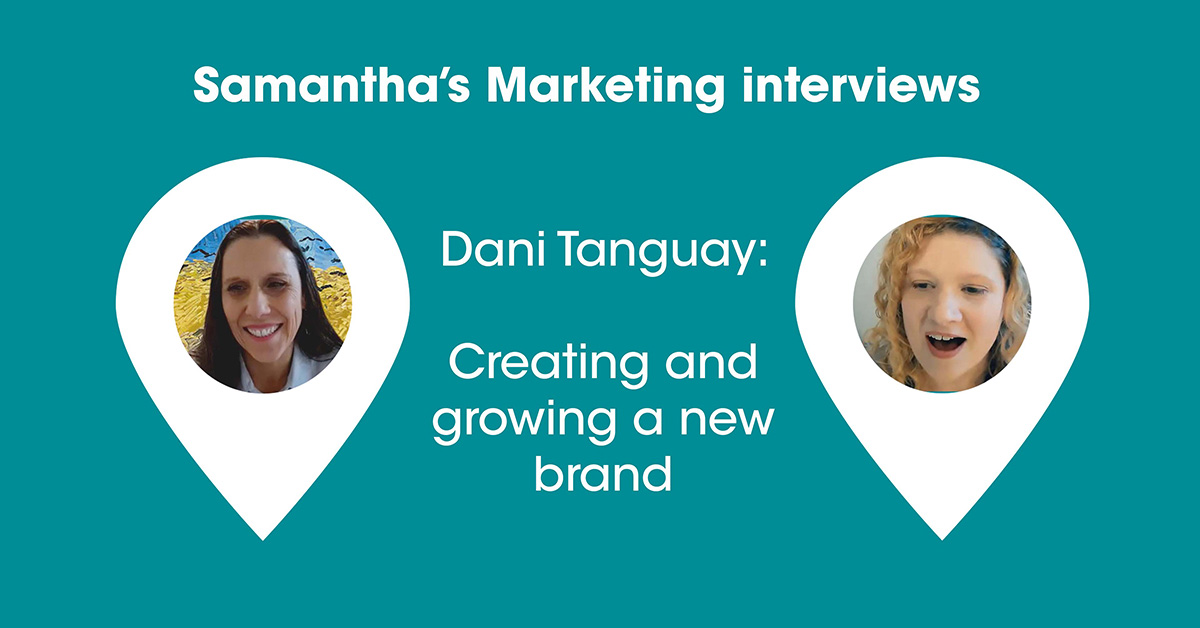
How do you grow a new brand? How to build brand awareness? Should you rebrand your existing company? Samantha dissects these topics together with Dani Tanguay, who was involved in creating the new brand of the engineering company, Ewellix. These two seasoned marketing experts share their invaluable insights in this interview and discuss the benefits and the pitfalls of rebranding or creating a new brand.
Dani’s links:
Watch the video here or read the transcript below if you prefer.
Samantha Tonge: Hello! It's another expert interview with Samantha at Labrakita Marketing. I'm here speaking to Dani Tanguay. I hope I pronounced your surname right, by the way.
Dani Tanguay: Yes, you did.
Samantha: Excellent! Good. Good start. So, you work at Ewellix in the Marketing department, don't you?
Dani: That's correct.
Samantha: Okay. And today we're talking about how you grow a new brand. People are usually building a new brand because they are starting a new company, but this was a bit different in your case, wasn't it?
Dani: Yes, it was. Absolutely. Yes. We were purchased by a company in 2018 and we changed name a year later. So we basically had to go to the market and introduce them to the brand Ewellix. New name, new colours, new corporate identity. And that was interesting to do, because we were coming from a company that was very well known in the market. So we basically had to go to the market and introduce ourselves saying: "Hey, we're still the same company, we're still the same people, same manufacturing, same products, we just have a new name." So that was a lot of work to remind people that we were the same, but we had a new name. They had to get used to our new identity.
Samantha: Yeah, and I think that's much harder than when you're starting from scratch, where you kind of expect to have to teach people the new name. Because when you've got existing customers, you've got a lot of brand equity already. It must have been quite a difficult struggle.
Dani: Yes, it wasn't an easy task. I mean, in some markets it was a little easier than others. We sell through OEM channels, and through distribution as well. And the distribution is where the older brand was very well established. So we had to do quite a bit of work to remind them that, you know, we changed name. That was interesting, because we had to really educate our distributors. There was a lot of change, you know, everything changed, the boxes, the product packaging changed. Everything was different. We, therefore, had to do a lot of communication, to pre-emptively tell them what was going to happen. So there was a lot of: "This is coming", so that they wouldn't be surprised when the next shipment comes in, and the boxes are different, the name is different, the colour is different. Bottom line is, we didn't want them to be surprised and think: "What is this? This is not what I ordered."
Samantha: Yeah.
Dani: So we did a lot of work with our distribution channel to inform them. And we did a lot of stuff: email marketing, and flyers. We did flyers that we sent out, and then we included flyers in the packaging, to constantly remind them: "Hey, this is who we are now."
Samantha: Yeah. So it's a lot of work not to lose brand equity. We should probably explain at this point that we're talking about industrial, business-to-business products.
Dani: Yes. We are a global, industrial manufacturer of electromechanical actuator and linear-motion technology. So yes, this is B2B, industrial market, for sure.
Samantha: Yeah. And it's a smaller range of products from what was originally part of a much larger company that had a wider range of products.
Dani: Correct. Yes, this is a division of the older company that was sold. So that's the other thing. The other companies still exist, and they still sell the other products. So the distributors still see that brand, and they still see those products. But our portion of the product is with a new name, and a new branding. So, I think that was an additional challenge, because it's not like the old brand disappeared from the market. It's still a very well-known brand, especially in distribution. So we also had to make sure that we really communicated clearly, because the other brand is still there, they still have it on the shelf. It's just that our products are no longer in that bucket, so to speak.
Samantha: So I suppose, there are some negatives, and there are some positives as well, in a way. Because from a brand point of view, you can focus on those products, and the types of customers that want those products. I imagine, your brand proposition changed quite a bit since you were able to be more focused?
Dani: Yes. As far as the brand proposition goes, of course. We're now marketing specific products and the product range is narrower, so to speak, compared to what the old brand was. So in a way, it's easier to focus, because you have certain products. Definitely. And with the OEMs, I think it was a little easier, because they know the product that they want. And if they want our product, it's easier to switch them off, so to speak, and switch them over to the brand. With distribution, it’s a little harder, because they also sell other brands, they have a lot more exposure to many different companies. Therefore, focusing in that market takes a little bit more effort and more communication. And so one of the things that we did was what I would call distribution kits, specifically in North America. It was a very nice box with our brand. And we had pens and notepads and communication and a welcome letter. The hope with that was that we continue to remind them who we are. And we give them material that they can keep on their desk that continuously reminds them of the new brand.
Samantha: Yes. Which I think is a good thing to do for any brand anyway, constantly remind people that you exist, because you want to be front and centre all the time.
Dani: Exactly. Front and centre. Exactly. Especially when you're talking to customers of multiple brands, you really want to be front and centre, so that you continually remind them that, you know, you're there, these are your products, and they should sell your products.
Samantha: And presumably there was quite a lot of work getting to the end users, who buy via distribution. Which was even more difficult, I imagine, because you don't necessarily have direct contact with them.
Dani: Yes. We rely heavily on collaboration with the distribution. So when it comes to that, it's a little bit more in the hands of our sales guys that work with the distributors, to go in at the end user and collaborate with them, to make sure that they select our products. Of course, everybody has a choice. So direct collaborations with the distributors, and having a presence there is what makes a significant difference.
Samantha: Yeah. One thing I imagine made a big difference is that your new logo is really distinctive. I don't know who the design team was that created the logo and all that stuff, but it really stands out.
Dani: Yes, yes.
Samantha: Which I'll link, when I put this video out. I will put a link to the website, so you can go have a look.
Dani: Yeah, great.
Samantha: When you're going out to market, you need something that really jumps out at you. And I think it does.
Dani: Yeah. So your audience will see what our corporate colours are: grey and yellow. And it's a pretty bright yellow. So we're fairly visible even just because of that, when we're out in the market. And the name is unique, which is a good thing. It also creates some challenges in Anglophone countries, because sometimes people are unsure how to pronounce the name of the company. But that makes for good discussions, you know?
Samantha: Yeah. Funnily enough, I have the same thing with my company name. And it's a good conversation starter.
Dani: Exactly. It makes for some good conversations. So it's a challenge and an interesting thing, all at the same time.
Samantha: Yeah. I can imagine it's quite challenging. I mean, obviously, I'm a relatively new company, I launched in 2019.
Dani: Just about the same time!
Samantha: Yes. So, I know some of those challenges.
Dani: I'm sure.
Samantha: But it's a bit different when you are launching a company. Presumably, you already had quite a lot of sales expectations that you have to continue to meet despite the completely new brand.
Dani: Correct. Yes. Because, coming from a company that already sold the products, the sales targets increased from when we were the other brand. So it's not like we had much lower sales targets just because we changed brand. The sales targets didn't decrease. That was also part of the strategy. We did not want to interrupt the momentum of the sales cycle and the product sales. That had to continue. So we had to be very proactive with the communication to the customers on all channels, because we didn't want to have this break in the sales cycle, where all of a sudden everybody is confused because one brand disappears and the other one is unknown. So for a good amount of time, we always presented our new brand, saying: "We used to be company XYZ", because, especially when it came to distribution, we needed to make that link. And that type of communication continued for a couple of years after, because we had to make sure that everybody was aware that we were the same company, you know, same people, same products. And so, we often linked the old company name, for as long as we could. Of course, you know how branding works, they will allow you to use the older, late name in material for a certain amount of time. So for the length of time that we had permission to use the old name and logo, we always connected it. In order for that transition to be a bit easier. And you know, it was a reminder of who we were and who we are now. It's been four years now. So, at this point, we still remind them occasionally, but we feel like the market knows who we are a lot more, than when we first started. Obviously. And I think there's a lot less confusion in the market now.
Samantha: Right. So do you think it is, in your particular situation, easier for you to hit your targets now and to get out there in the market than it was being a small part of a much bigger brand? I know this is unusual for people watching this, who may or may not end up in this situation at some point. But mergers and acquisitions do happen all the time.
Dani: I think, being a smaller company, in relative terms, compared to the other brand that we were, we are now more flexible, and more nimble. So from that perspective, yes, I think it's a little easier, because we can move a little quicker and we can do things a little bit more efficiently.
Then again, when you have a very well-known brand behind you, the branding portion is easier. So the branding portion, in this case is a little more challenging, because we're a new company, so to speak. Having a bigger brand and a more known brand behind you makes it easier because you walk into a customer and they immediately go: "Oh, I know who you are." Where with us, they're like: "Wait, oh, yeah, I do remember who you are now." So from the branding perspective, it's a little more challenging, because we're newer. But I think from the operational and sales point of view, it's a little bit easier, because we're fewer people. Even just from the marketing, it's a smaller group, so we collaborate very closely. And it's easier to produce material, because there's fewer of us. It's also a lot more work because the department is smaller, but we can communicate quicker. And, you know, I focus on North America, but I also have a global role when it comes to distribution. So I collaborate with my co-workers overseas very closely and having a much smaller team makes that easier, because it's easier to get a hold of each other.
Samantha: Yeah, I can imagine. I think this brings us onto an important point, because I speak to a lot of people who get bored of their own brand, and they want to rebrand. Not really because that's the right thing to do for the market, they just think it needs to be done. And I think it's important to say that if you’ve built up brand awareness, that is going to make your life more difficult.
Dani: I agree. Yes. I mean, rebranding just for the sake of rebranding, I don't think is a good strategy. Refreshing your brand, because you want to be more modern is another thing entirely. Even just when it comes to the graphics, the typefaces and the colours. If your brand has been around for a long time, and you want to refresh it because you feel you're dated, then it makes sense. But rebranding completely, including changing the company name, just for the sake of rebranding... I don't know if that's a good strategy. Not to mention, it's a lot of work. Then you're gonna go out into the market and you’ll have to reintroduce yourself. So if you have a very well-known brand, I don't think that that would be a smart move. You're going to make your life very difficult.
Samantha: Yeah. I completely agree. And I think people don't necessarily always understand exactly what brand is either. It's the core of who you are and what you mean to the customer. And that maybe needs to be re-looked at every so often, which then may have an impact on graphics surrounding it. You need to keep up to date with the market, because the market is always changing. Also, I think COVID completely changed everything forever. It accelerated change.
Dani: Yes, that's true. And, I don't know, my experience is strictly B2B, industrial market. So I don't know if this is kind of an assumption on my part, but I think that the industrial market changes a bit more slowly than B2C.
Samantha: Yeah. I agree.
Dani: And so in B2B, specifically in industrial market, I don't think the branding evolves quite as quickly. So for me, again, changing just for the sake of changing, I wouldn't do it, personally. If you're a B2C product, maybe you need to change a little more often? You have to become more attractive to your target audience. But that depends on your target, right? If your target is much younger all of a sudden, then yes, of course, your branding has to change to match that. But in industrial, things don't quite move as fast. The technology does. But you know, that's different. The technology certainly changes and you have to be able to move with the market with that. But the branding, I don't know, if it's quite as flexible. It doesn't change as much, I would say.
Samantha: No. No, you might need to change the messaging slightly. That's more likely than actually having to change anything about the brand itself.
Dani: And our message is different, depending on the industry, you know. We have a product that fits in multiple industries, and in very different applications. So the product might be the same, but the message is different because the needs of that industry and that application is different. So our messaging changes based on the industry that we focus on. Even though the product might be the same, the message is completely different.
Samantha: Yes. So in one industry, their focus might be entirely on accuracy and precision and another might be all about energy saving?
Dani: Yes.
Samantha: And your product might do both things.
Dani: Exactly. You need to know what the industry is focused on, and how the product fits their needs. And how our product helps them achieve their goals. But their goals might be different, depending on the industry that they're in.
Samantha: Yeah. But that doesn't mean you necessarily need to change your colours.
Dani: Oh, gosh no!
Samantha: Or your font, or whatever, just because you're bored.
Dani: No. Yeah, no. We do have a corporate identity that we follow, just like most companies. So all our material is consistent across the industries, and the markets. It's only the words that change, and the focus changes. But when it comes to the broad pieces of the branding, that doesn't change. We have to be very consistent with that, especially because we are a new brand. That's one thing that we really need to focus on, to be consistent across the markets and the countries, because of course, we're global. And so everywhere we are, we need to have the same image, you know, with some flexibility. But overall, we have to be consistent.
Samantha: I think it's important to mention here that, I think a lot of people kind of dismiss that side of branding: "Oh, it's just, you know, brand police." That's one of the things that it used to be called: "brand police".
Dani: Yes! Yeah, the "brand police", or the "logo police".
Samantha: But it is important, because it makes your brand more recognisable. And we all know from the B2C world, that if you think of McDonald's, they can just use a part of their logo…
Dani: And everybody knows.
Samantha: Yeah. A little tune that if you hear, you know that's McDonald's. Everything about them is easily recognisable. They don't even have to have their full logo on everything, but you know it’s them.
Dani: Yes.
Samantha: And you have certain feelings about them. It might be positive, it might be negative.
Dani: Right. Fair enough. Right.
Samantha: I mean, if it's negative, you are never going to buy from them anyway. So they don't really care. But it has that sort of emotional connection. And I think that's true in B2B as well. It might be very different emotions.
Dani: Yes.
Samantha: But we're talking about big purchases, where, in a lot of cases, if say, someone makes the wrong decision, their job could literally be on the line, especially if it's going into a bigger product. So you mentioned OEMs, which is Original Equipment Manufacturers, just for anyone watching, who might not understand that. That's where these products would be going into a big piece of machinery. If they made the wrong decision, and that made the whole piece of machinery malfunction…
Dani: Right. There's big consequences of it. And then, this is completely personal opinion, but I think when it comes to B2C, there are more emotional connections to a brand. You know, you either love it or hate it, or you're indifferent. But you tend to have your loyalties to certain brands. When it comes to industrial, I think there is a little bit of that, but I think it's less emotional. It's more of the: "I know this brand has products that work well. They're precise, the engineering department knows exactly what they're doing, and they can help me solve my problems". I think the brand loyalty in B2B comes from that.
And you're right, the whole brand police is often, you know, we talk to colleagues, and they're like: "Oh, nobody's gonna notice that." And we're like: "Well, yeah, they might not". But yes, they probably do. And the danger of being too lax is that you might start deviating so much, because nobody notices, you know, in quotes, and then a year down the road, you look at some of the material, like: "Wow, this looks like a completely different company. I mean, we don't even look the same!" And we don't want that. Obviously. While we are a smaller company, and we allow for more flexibility, even in the creation of material, overall, we want to be the same company. We want to present ourselves to the market the same way. And we want that wherever you are in the world, you look at our name and logo, like: "Oh, yeah, I know who they are." Instead of having somebody look at some material, and go: "Wait a minute, I thought that was that company, but it looks completely different". So the role of the policing is more for that than just being needlessly picky about something.
Samantha: Yeah. Absolutely. I mean, yes, the customer is not going to sit there and go: "Hold on a second. That's Verdana when it should be Helvetica", or whatever.
Dani: Exactly. They're not going to notice that.
Samantha: But subconsciously they do. It's all part of what they associate with that brand, whether they know it or not. You know, they're all combined.
Dani: Exactly. And you know, again, they might not notice the font difference. But if the layout is completely different, or the colours are off, or if the design is completely different from what the standard is, those are noticeable changes, and people will notice. And then confusion starts. Because then you don't know, or you're not sure whether it's really that company. And we definitely want to avoid that.
Samantha: Absolutely. Especially now that you've done all this hard work to get the brand recognised.
Dani: Exactly. We've done a lot of hard work, and people are starting to recognise us as a brand. So we definitely want to continue with that.
Samantha: Yeah, absolutely. Absolutely. So is there anything else you think people should be aware of if they have to rebrand?
Dani: Well, things that you need to be aware of: People will not know who you are. That is a given, especially in the beginning. So you have to be really patient in reminding them. And it's gonna feel like you are reminding them too much, but trust me, you're not. That's something that we all struggled with. Because sometimes when we were preparing our communication, we were like: "They know who we are by now!", because we see it every day. And, you know, as employees, working in this company, we see it and work with it every day. We live and breathe the company name and branding. And so you catch yourself in some spots where you're like, "Oh, gosh, I've just told them! They must know who we are!" But you'd be surprised. And I think sometimes over-communicating is better than not communicating enough. Some people might look at your communication and say: "Oh, yeah. I know exactly who they are", while some people are like: "Oh, right. I forgot about that." And so I'm always a fan of the "over-communicate, rather than not communicate". So be patient.
And make sure that you're always consistent, especially in the beginning. Consistency, I think is key when it comes to the design and the colours. Even though, again it might seem superfluous to people that are not in the marketing or design world. They might think: "Oh, you're just being picky!" We're not. There's a reason behind it.
And then be creative. Find ways to put your brand out there. You know, sometimes we all get stuck in a "We've always done it this way" kind of situation. And when you have a new brand, that's not necessarily useful. So try to do different things and go at the market in a different way. That could be surprisingly helpful.
Also make sure that your sales force is really involved. And they are very excited about the new material. Make sure that they know it's available, and make sure they'll use it. Again, that's where over-communicating sometimes comes in handy, because you know, we're all humans, we forget. So I think really making sure that the people that face the customer every day, really embrace the brand is quite important.
Samantha: Yeah. On your first point, it's quite funny, because that's one of the things I always tell my clients: "You will get bored of your brand and your messaging, etc., long before your customers start remembering it.”
Dani: Oh, yeah. Way before. Yes, absolutely. And that is true, it does happen. Because, again, you see it every day, they don't. And so yes, we all get bored of our own branding and designs, way before the customer. I mean, I don't think the customer ever gets bored of seeing a brand. They don't see it as much as we do, who work for the company. But I think consistency, is really key, for sure.
Samantha: Yeah, because you're just one of many brands to them.
Dani: Absolutely. Yes. Especially if you are in one of those unique markets, where there's only five of you. Then it's obviously a lot easier to be in front of your customers, and they'll remember you a lot quicker than when you are one of many competitors. That is even more complicated, because they are exposed to so many companies and they need to remember you.
Samantha: Yeah. Another really important point that you mentioned there is getting sales involved. When I'm working with a client on their brand, not necessarily rebranding, just on their brand, I try to get people involved from different parts of the organisations. And yes, sales is key. They're the ones talking to the customers directly at the end of the day. They need to be 100% on board, and like you say, they need to be excited about the message. They need to believe in it, otherwise the customer never will.
Dani: Exactly, exactly. You know, in our case, we have sales, customer service, and engineers. All those functions are customer facing and they talk to the customer every day, so you absolutely have to make sure that they are on board with the name, the colouring, whatever it is that you're doing. They have to be aware of it, first of all, and you have to make sure that they understand it, and that they continue relaying the message the way you want it to be relayed. Because they are the ones that talk to the customers every day.
Samantha: And I suppose it is necessary in the other direction as well, because they're talking to the customers every day, so they might be aware of things that are changing at the customers' or things that customers are focused on that you might not be aware of, things that affect your communication then.
Dani: Absolutely. And that's where, you know, when you work on your material, always involve sales, or if it’s a product, we obviously need the product marketing person and the engineers. I mean those are key people, who need to be involved when you create the material, because they are the ones, like you said, who know what the customers’ challenges are. And those challenges can be key when you're developing your message. Because you want to speak to your customers and you want to speak their language. So that is important. And if you don't involve the people that know the customers, you don't know. I don't speak to the customers directly necessarily. So I need either the engineers' or the sales' feedback, because they know exactly what's going on in the customer's world and they can help me craft my message so that the customer reads it and goes: "Oh! Yes, they understand where I'm coming from and they understand what I need." So, absolutely. You have to involve them. That's key.
Samantha: Yeah, that's great to hear. I think there are far too many marketers out there that don't talk to the rest of the organisation, especially sales. Sometimes they even knock heads.
Dani: I know! Sales and marketing, they are always fighting with each other. Absolutely, we still have that over here. I think that's going to be one of those things that is the same in every company. You know, sales and marketing are always butting heads at one point. But yeah, but we do collaborate. And being a smaller organisation actually makes that easier. It's a lot easier to get the right people to work with you, because you don't have to sift through, you know, hundreds or thousands of people. So you know exactly who you need to talk to for the specific application or industry. And those people are the ones that have the knowledge. It always surprises me... Well, not surprises me, but it amazes me that we have so much knowledge within the company. And that knowledge is fundamental for us marketers, because, again, I'm not a technical person, or an engineer, I need them to explain to me how that product works. And then I can work around that. So I think, the knowledge within the company is fundamental for the marketing department to be able to go to the market with the right message and the right offers. For sure.
Samantha: Yeah. It's amazing. I've worked with some clients, where you bring people together in a room, and the business owner or manager is like: "I didn't know that!"
Dani: See?! Exactly! "I didn't know how that worked!" Yeah. Oh, yeah. I find myself in situations like that all the time. It’s like: "Oh, wow! I didn't know we could do that!" And that's important, because, if I didn't know, the customer might not know either.
Samantha: Exactly.
Dani: And that's a good message to bring out. Absolutely. Yeah, collaboration really goes a long way. For sure.
Samantha: Brilliant. Oh, thank you so much for that! That was a lot of information for people to take in, I think. I think we got through quite a lot in quite a short time.
Dani: Yes, we did. Yeah, that's for sure. No, I was happy to speak with you.
Samantha: Brilliant. Thank you very much. And like I said, I'll put the website out there. And is there anything particular that you'd like me to mention to people, or send links to people?
Dani: No. I mean, you can link to the website. Everybody can get a lot of information from there: who we are, what we do. All our material is out there. There's a media library section on the website where we post all our videos, brochures, and all our marketing material. So I think people can get a lot of information from our website.
Samantha: Yeah. And get ideas. If you try to understand how a consistent brand looks, and someone distinctive. It gives you a bit of an idea how it's done well.
Dani: Thank you. Thank you. For sure. Yeah. But you know, again, I always like to see other people's work and see what other companies do. It's always interesting. And you can always learn something new. You never know.
Samantha: Yeah, absolutely. Brilliant. Well, thank you very much.
Dani: Of course. Thank you so much.
Samantha: Thank you everyone for watching.
Dani: Thank you!
Samantha: Bye, everyone!
Dani: Bye bye!
Interviewer: Samantha Tonge, Managing Director, Labrakita Marketing
If you need help with your Engineering marketing, brand and strategy contact me on 07791 521439 or email me at samantha@labrakita.co.uk.